
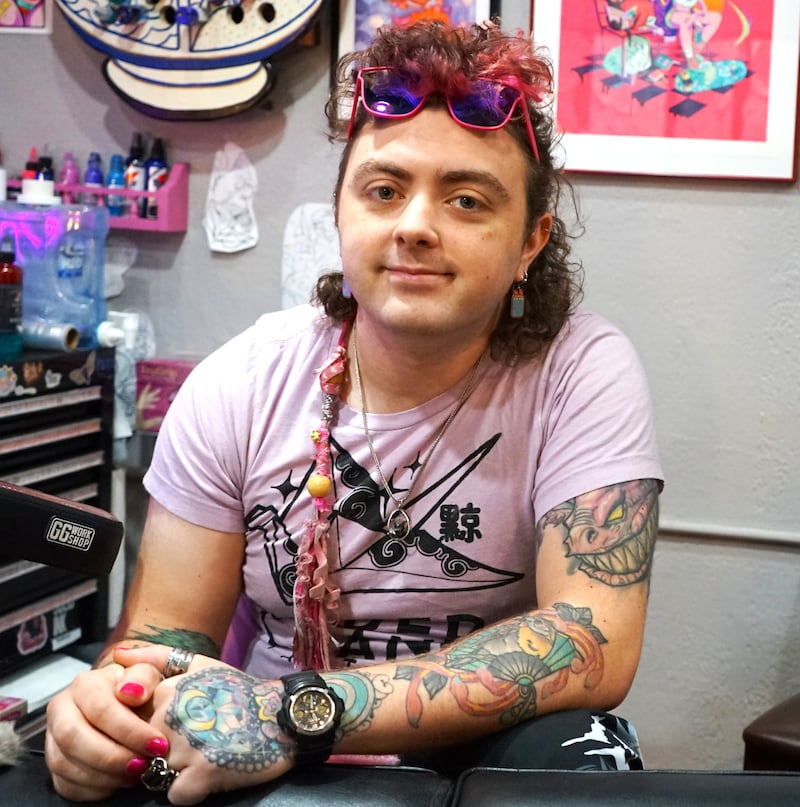
SHREVEPORT, La. (KSLA) - Shreveport tattoo artist, Aaron Culpepper, speaks with ArkLaTex Artistry’s Brittney Hazelton about how to become a tattoo artist, the tools of the trade, and his influences.
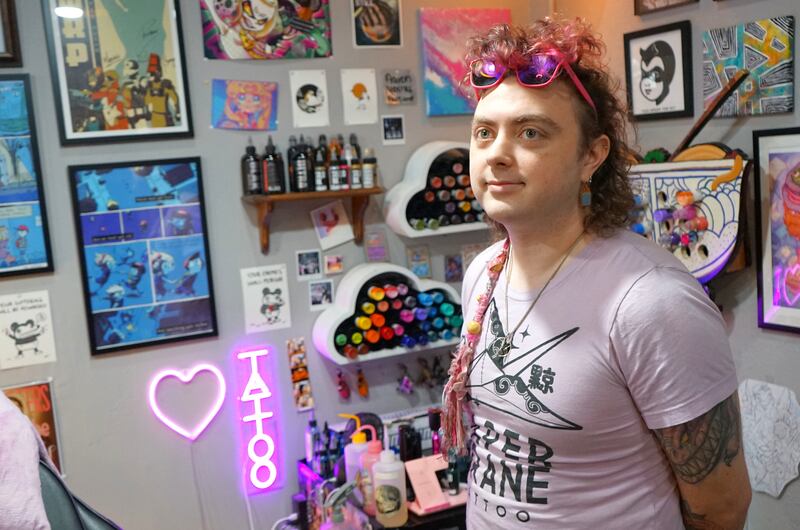
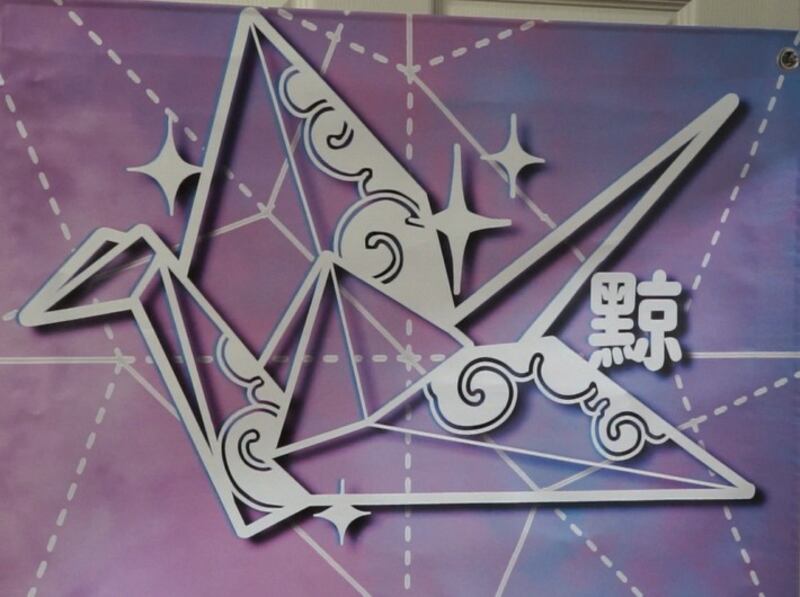
Originally from Monroe, Louisiana, award-winning tattoo artist Aaron Culpepper settled in Shreveport, Louisiana, and created his own studio, Paper Crane Tattoos and Art, 1407 Fairfield Avenue.
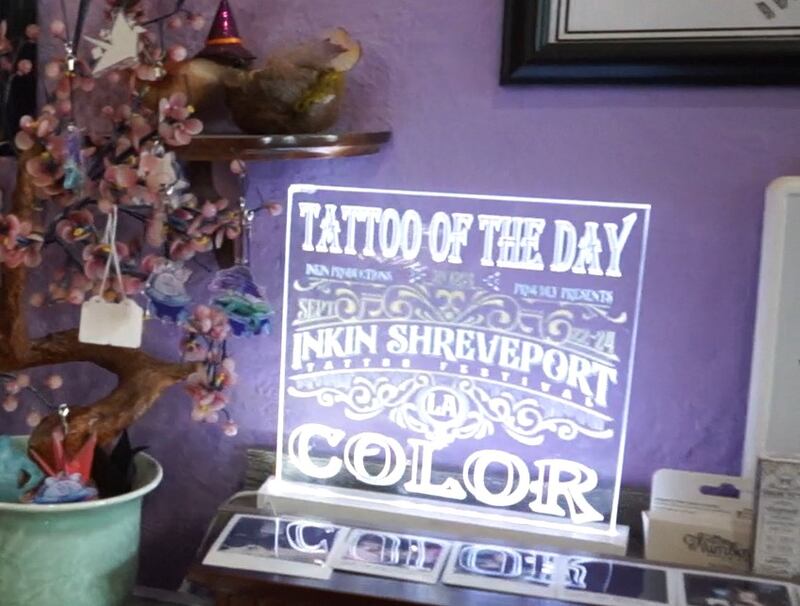
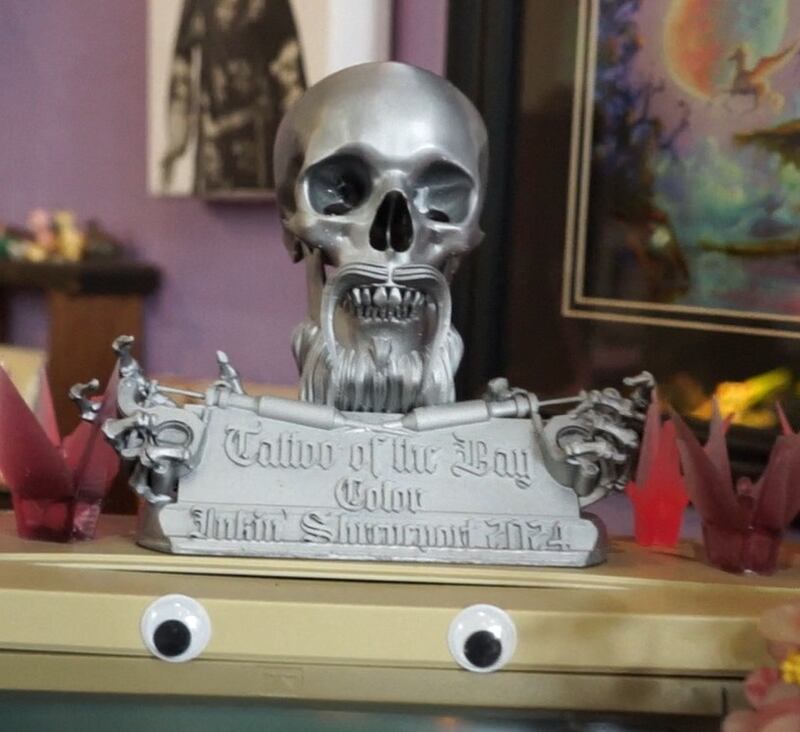
Culpepper has won multiple awards for his tattoo art from several different tattoo conventions, including Shreveport Inkin’ and a Dallas convention. His tattoo style is vibrant neon colors, almost with a watercolor-like quality.
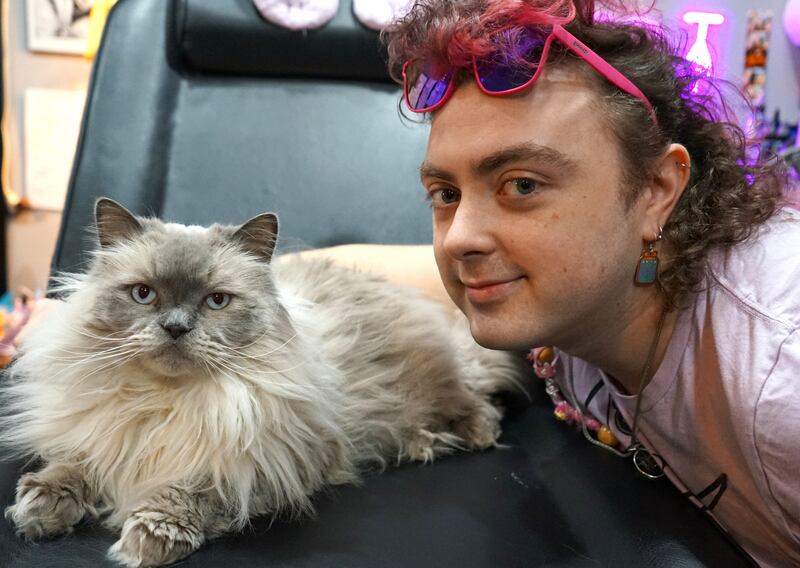
Culpepper and his cat, Blue, aim to provide a safe space for individuals to be themselves, especially the LGBTQ+ community.
Paper Crane Tattoos?
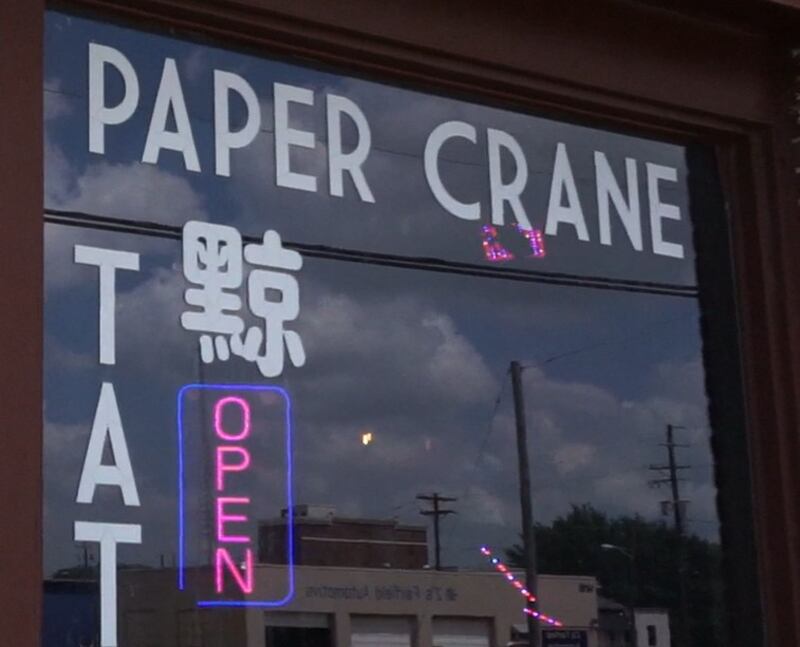
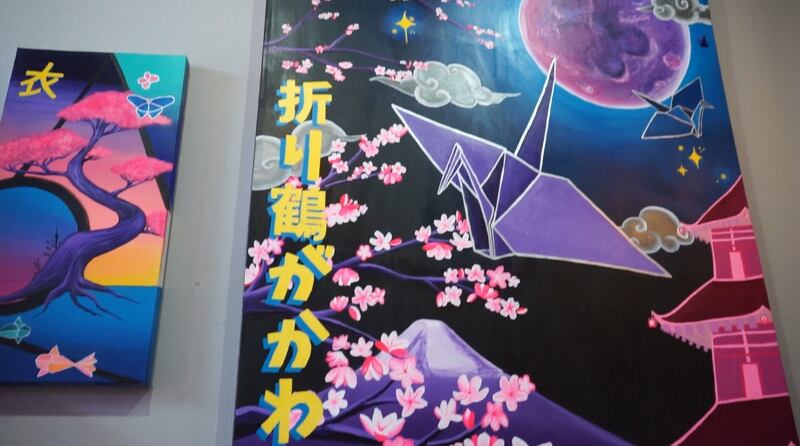
“It was just one of those things. I like Japanese things. I always loved origami, and I must have written down a 100 different names. My girlfriend wrote down one, and that’s the one we went with,” explains Aaron Culpepper.
ADVERTISEMENT
Steeped in traditions for each new client, Aaron Culpepper has them catch a Pokémon on his Game Boy and fold a paper crane, which he hangs from the ceiling of his shop.
How did he get started as an artist?
“Probably as a bored kid in church,” says Culpepper. “I was just always drawing when I was bored. Starting out, I just wanted to figure out a way to make art as a living. That’s kind of what ended up drawing me to tattooing.
Culpepper couldn’t see himself doing anything else but art.
“I felt like I had limited options, and that was my main one,” says Culpepper.
 Opens in new window
How did he start tattooing?
There weren’t tons of options as an artist to make money; gallery art wasn’t working out for him, and he wasn’t very interested in doing graphic design.
ADVERTISEMENT
“When you start out young, and you’re drawing, everybody is like, Oh, you should tattoo. Draw me a tattoo. You know how kids are if you are drawing in PE class or whatever. Draw some crappy tribal tattoo for someone,” says Culpepper.
His career as a tattoo artist kicked off with a little support from someone who saw his potential and supported him.
“I think it was my cousin who went into a shop and talked to a guy, and showed him my art. And, asking if I could come in for an interview,” says Culpepper. “Pretty sure it was, because I was too shy to do it myself. I might not be a tattoo artist if it wasn’t for her going in and asking this guy.”
Support is important for any artist to get started.
“Just a little push can help,” says Culpepper. “Thank you, Kaylee, for doing that.”
How to get started in the tattoo industry?
First, be an artist already. It’s much easier to become a tattoo artist if you already draw or do art on the regular.
“It’s about going in and asking about apprenticeships and really staying on people about apprenticing you,” explains Culpepper.
How do you get an apprenticeship?
“Really, the most important thing is putting your art out there. If I want to hire someone and teach them. I want it to be someone that is already an artist,” explains Culpepper. “I don’t want to teach someone that wants to be an artist.”
Becoming a tattoo artist can be a little hard at first.
“Starting out for me was really rough. It took forever. I was just like, you know, trying to do all of the walk-ins. So, I wasn’t spending any time on my own art. And, it took years for me to finally develop my own art style because of that,” says Culpepper. “The artists that are starting out today that are more successful immediately are the people who have been artists for a long time, have been developing their own style. And, people like their art.”
ADVERTISEMENT
Actively being an artist and putting your stuff out there is the best way to start on the path to becoming a tattoo artist.
“That’s a thousand times more favorable for them,” says Culpepper.
How to grow as a tattoo artist?
Putting the art out there for any artist is important.
“Social media is its own nightmare. But, if people see your stuff online, then they can start to identify with it over time,” says Culpepper.
Word of mouth is important for any tattoo artist, and that’s why it’s important to support artists you like, especially artists you have tattoos by.
“There is definitely a holy grail of tattoo customers that you can find. If you happen to do a tattoo on someone that is also really outspoken and goes out a lot. That’s baller,” says Culpepper.
“Basically a walking gallery for you,” says Brittney Hazelton.
“That’s a game changer. To find people like that and do really good work on them, and suddenly you get like 30 people from that one person,” explains Culpepper.
Tools in the profession
“For most of my line work on stencils and stuff, I draw digitally. I have for a very long time. I’ve always used a Wacom tablet or something of that nature. Way before people were using iPads, I was using digital tablets. People thought I was completely insane,” Culpepper chuckles as he explains. “Now, literally every artist has an iPad, they’re drawing with. It’s so funny to me. Aside from me, I still don’t use iPads. I still use my old Wacom tablets.”
With digital tablets, different programs can be useful, such as Photoshop, Procreate, and Clip Studio Art.
People get used to drawing digitally, but Culpepper also still enjoys drawing designs on paper.
“I feel like I get more done. Whenever I draw digitally, I feel like I get distracted with a thousand things. So, its always just really nice to pull out a piece of paper, sketch up a drawing for a tattoo,” says Culpepper.
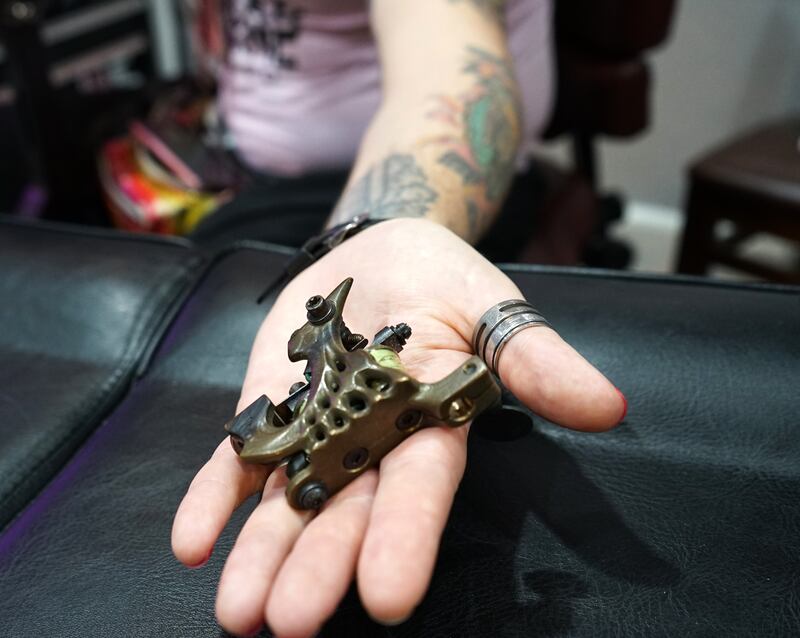
When it comes to tattoo guns, Culpepper uses all sorts.
“I have a bunch of different machines. I’ve been using the Axys Valhalla for a long time, which is this pretty pink one. It’s a rotary pen-style machine. It’s not a coil. I’ve been thinking about going back to coils, but I use so many needles, different-sized needles, when I tattoo, that it’s a pain. Cause, its so easy to just switch out between the little cartidges quickly, and you can’t do that with coil machines,” says Culpepper. “You have to have a seperate machine set up for each type of needle. (with coils)”
Culpepper started with cheap coil machines out of King Pin Magazine.
“When I finished with my apprenticeship, me and my guy that taught me, splurged and got a machine by a guy named Aaron Cain. Who, I just learned is actually still hand-making machines. Which is crazy in today’s age,” says Culpepper.
Influences
Japanese culture and anime are big influences on Aaron Culpepper. But also cats, all animals, but mostly cats.
Artists like Jack Curby, an American comic book artist, Kim Jung Gi, a Korean illustrator and cartoonist, and manga artist Toriyama, and Junji Ito are all huge influences for Culpepper.
“I either like really cutsie stuff or really creepy stuff, usually. Not really any in between,” says Culpepper.
a Culpepper’s mother was also big influence on art for him. She is an artist who creates surreal scenes out of collage.
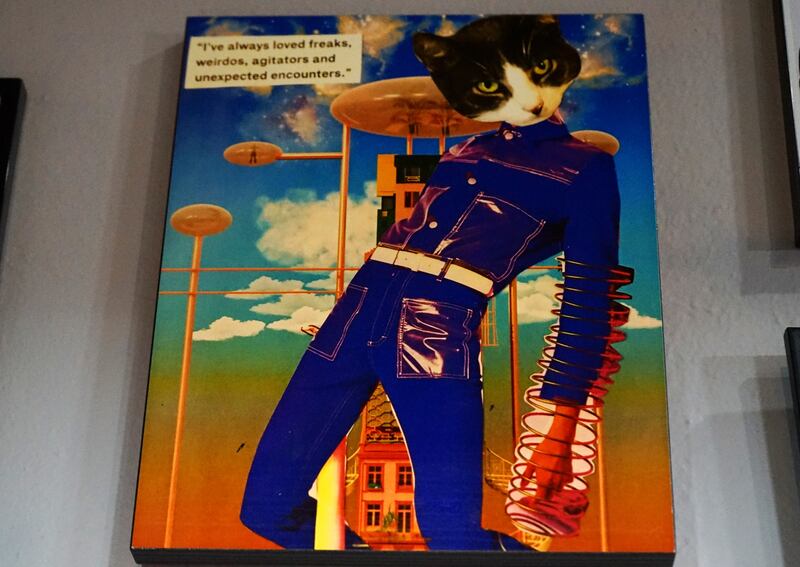
“My mom, starting out, anyone you know who is making anything will influence you. She was drawing a lot back then. For a while, she was also making collages. She still makes colleges every now and then.
What Aaron Culpepper wishes customers understood before a tattoo session.
“Expectations are a really big thing with tattoos, I guess. Most people don’t know what makes a good tattoo. What makes a tattoo stay long and age well. So, people will come in and say, ”This is the thing I want. The exact image in my head, my exact expectation.” But in reality, it really wouldn’t work as a tattoo, like even remotely. So, then you are having to fight against their expectations. Then its never a winning battle for anyone," explains Culpepper.
Lend some trust to the experts. They have taken the time to learn the craft, and if they offer advice, explain something may not look good, or say that it would look better a certain way, it’s likely for a good reason.
“It can just get really messy sometimes if you have a really big expectation of what you want instead of coming to an artist and giving them an idea to make the art with,” says Culpepper.
Paper Crane Tattoos and Art is a safe environment where everyone is welcome, especially the LGBTQ+ community.
“And, not only is there a therapy cat, but I aim for this to be like a safe place for all sorts of people. Be it just weirdos or queer folk. Whatever you are. Everyone is fine here,” says Aaron Culpepper.
Copyright 2025 KSLA. All rights reserved.